Dangerous Crossroads: NATO Plans to Cross “All of Moscow’s Redlines”. Another $100 Billion in NATO Military Aid for the Neo-Nazi Regime?
When
the political West launched the Ukrainian conflict over a decade ago,
it hoped to snatch all of Ukraine without any major issues.
In hopes of keeping the peace, Russia has been warning against this for decades at that point, but leaked data shows that NATO planned to cross all of Moscow’s red lines
and escalate the conflict to what we’re seeing now. Back in 2014, the
Kremlin responded with a blistering action in Crimea, preventing the
then newly installed Neo-Nazi junta that hijacked Ukraine from taking
control of the peninsula. In doing so, Russia prevented yet
another NATO-orchestrated bloodshed. Unfortunately, as its Kiev puppets
attacked Russian-majority regions, precisely this happened in these
areas, resulting in up to 15,000 casualties until Moscow was forced to launch its special military operation (SMO) over two years ago.
During this week’s NATO meeting in Brussels, officials
discussed moving the so-called Ukraine Defense Contact Group (UDCG)
into the belligerent alliance’s control. The move would formally be
finalized at the next summit in July. UDCG, launched two years ago by US Defense Secretary Lloyd Austin and former Joint Chiefs Chair General Mark Milley,
was used as the front for sending hundreds of billions of dollars in
Western military gear to the Neo-Nazi junta. By placing the group under
direct NATO control, the warmongers in Washington DC seek to cement the so-called “Ukraine aid” even if Donald Trump returns to the White House, a very likely outcome, despite incessant attempts by US federal institutions to prevent it. And yet, even that won’t be enough, as the belligerent alliance needs more money to sustain the Kiev regime.
Inaugural Ukraine Defense Contact Group meeting on 26 April 2022 (From the Public Domain)
Namely, NATO Secretary General Jens Stoltenberg wants another $100 billion for the Neo-Nazi junta, a sum that all other members are supposed to give as US funding is drying up.
The belligerent alliance wants 32 of its member states to contribute to
the fund in the same proportion as they finance NATO’s shared budget.
Stoltenberg thinks this would “take the politics and uncertainty out of
military aid to Ukraine by setting up a five-year, €100 billion fund and
having the alliance shoulder more of the weight in organizing arms for
Kyiv”. In other words, the members (the vast majority of them
effectively vassals and satellite states) would be left with no choice
but to finance the deeply corrupt Kiev regime and its unwinnable war with the military superpower next door. In fact, Stoltenberg essentially said so during the meeting.
“We
must ensure reliable and predictable security assistance to Ukraine for
the long haul so that we rely less on voluntary contributions and more
on NATO commitments. Less on short-term offers and more on multi-year
pledges,” he stated.
However,
the increasingly cash-strapped NATO members, particularly those in
Europe, aren’t exactly thrilled about the idea, to put it mildly. As
Politico writes, the reactions were mixed, with Poland, Turkey and
Germany on board with the proposal, while the rest of the foreign
ministers were either indifferent or opposed to it. According to the report, one diplomat said that some ministers rolled their eyes at the €100 billion number, wondering where it came from. Foreign Minister of Belgium Hadja Lahbib
warned that it’s “dangerous to make promises that we cannot keep”,
while other diplomats cautioned that “the discussion on financing
remains at a very early stage”. On the other hand, perhaps the sole sovereigntist NATO and EU member Hungary is resolutely opposed to the idea, which is why Politico is accusing it of being supposedly “pro-Russian”.
In a normal world, this would be a sound argument that nobody could really deny. However, as the belligerent alliance has never really been a “defensive alliance”, it’s only logical that its political elites would want to formalize its true nature.
However,
getting most of the members on board with this is easier said than
done. Waging war even against largely helpless opponents has been
“problematic” (to say the least) in recent years, with NATO humiliated
in Afghanistan when the extremely low-tech Taliban defeated the world’s
most aggressive military alliance. What’s more, even the Taliban,
demonized for decades as some sort of “monsters”, proved to be far more humane than the political West. This also serves as a lesson to the entire world that NATO is a threat to global peace and security, bringing nothing but death and destruction.
Glenn Greenwald informs his audience of the material implications regarding Blinken's recent promise to Ukraine.
17 minute video at article address
Comment to video
" As I recall the NATO Charter, says that an attack on any member
state is an attack on all of NATO and requires NATO to respond in
defense of any of its members.
So, if Ukraine is voted into NATO while the war continues NATO is
obligated to defend, meaning to attack Russia. This will mean WWIII.
Or, what Blinken is signaling, if there is an end to the war and
Ukraine then is admitted into NATO, Russia will be compelled to attack
Ukraine again and this will trigger WWIII. Only under this scenario
Russia will be seen as the aggressor.
In either case, American policy seems to be to continue to expand the war, this time with all NATO members as active combatants.
Amid the intensifying water crisis that plagues billions of people across the world, Israel is using water as a weapon in its war against Palestinians by denying access and destroying infrastructure.
By November 2023, it was already clear that the Israeli government had begun to deny Palestinians in Gaza access to water.
“Every hour that passes with Israel preventing the provision of safe
drinking water in the Gaza strip, in brazen breach of international law,
puts Gazans at risk of dying of thirst and diseases related to the lack
of safe drinking water’, said Pedro Arrojo-Agudo, U.N. special rapporteur on the human rights to safe drinking water and sanitation.
“Israel,” he noted, “must stop using water as a weapon of war.”
Before Israel’s most recent attack on Gaza, 97 percent of
the water in Gaza’s only coastal aquifer was already unsafe for human
consumption based on World Health Organisation standards. Over the
course of its many attacks, Israel has all but destroyed Gaza’s water purification system and prevented the entry of materials and chemicals needed for repair.
In early October 2023, Israeli officials indicated that they would
use their control over Gaza’s water systems as a means to perpetrate a
genocide. As Israeli Major General Ghassan Alian, the head of the
Coordination of Government Activities in the Territories (COGAT), said on
10 October, “Human beasts are dealt with accordingly. Israel has
imposed a total blockade on Gaza. No electricity, no water, just damage.
You wanted hell, you will get hell.”
On March 19, U.N. Humanitarian Coordinator for Palestine Jamie McGoldrick noted that
Gaza needed “spare parts for water and sanitation systems” as well as
“chemicals to treat water,” since the “lack of these critical items is
one of the key drivers of the malnutrition crisis.”
“Malnutrition crisis” is one way to talk about a famine.
The assault on Gaza – whose entire population is “currently facing high levels of acute food insecurity,” according to Oxfam and the Integrated Food Security Phase Classification – has sharpened the contradictions that strike the world’s people with force.
A U.N. report released
on World Water Day (March 22) shows that, as of 2022, 2.2 billion
people have no access to safely managed drinking water, that 4 in 5
people in rural areas lack basic drinking water, and that 3.5 billion
people do not have sanitation systems.
As a consequence, every day, over a thousand children under the age of 5 die from
diseases linked to inadequate water, sanitation, and hygiene. These
children are among the 1.4 million people who die every year due to
these deficiencies.
The U.N. report notes that, since women and girls are the primary
collectors of water, they spend more of their time finding water when
water systems deteriorate due to inadequate or non-existent
infrastructure or droughts exacerbated by climate change. This has
resulted in higher dropout rates for girls in school.
A 2023 study by U.N. Women describes the perils of the water crisis for women and girls:
“Inequalities in access to safe drinking water and sanitation do not
affect everyone equally. The greater need for privacy during
menstruation, for example, means women and girls and other people who
menstruate may access shared sanitation facilities less frequently than
people who do not, which increases the likelihood of urinary and
reproductive tract infections. Where safe and secure facilities are not
available, choices to use facilities are often limited to dawn and dusk,
which exposes at-risk groups to violence.”
The lack of access to public toilets is by itself a serious danger
to women in cities across the world, such as Dhaka, Bangladesh, where
there is one public toilet for every 200,000 people.
Access to drinking water is being further constricted by the climate
catastrophe. For instance, a warming ocean means glacier melt, which
lifts the sea levels and allows salt water to contaminate underground
aquifers more easily. Meanwhile, with less snowfall, there is less water
in reservoirs, which means less water to drink and use for
agriculture.
Already, as the U.N. Water report shows, we are seeing increased droughts that now impact at least 1.4 billion people directly.
According to the United Nations,
half of the world’s population experiences severe water scarcity for at
least part of the year, while one quarter faces “extremely high” levels
of water stress. “Climate change is projected to increase the frequency
and severity of these phenomena, with acute risks for social
stability,” the U.N. notes. The issue of social stability is key, since droughts have been forcing tens of millions of people into flight and starvation.
Capitalist governments must not be allowed to point to an ahistorical
notion of climate change as an excuse to shirk their responsibility in
creating the water crisis.
For instance, over the past several decades, governments across the
world have neglected to upgrade wastewater treatment facilities.
Consequently, 42 percent of household wastewater is not treated properly,
which damages ecosystems and aquifers. Even more damning is the fact
that only 11 percent of domestic and industrial wastewater is being reused.
Increased investment in wastewater treatment would reduce the amount
of pollution that enters water sources and allow for better harnessing
of the freshwater available to us on the planet.
There are several sensible policies that could be adopted to immediately address the water crisis, such as those proposed by
U.N. Water to protect coastal mangroves and wetlands; harvest
rainwater; reuse wastewater; and protect groundwater. But these are
precisely the kinds of policies that are opposed by capitalist firms, whose profit line is improved by the destruction of nature.
In March 2018, we launched our second dossier, “Cities Without Water.” It is worthwhile to reflect on what we showed then, six years ago:
“The Intergovernmental Panel on Climate Change’s Technical Paper VI (IPCC, June 2008)
is on climate change and water. The scientific consensus in this
document is that the changes in weather patterns — induced by
carbon-intensive capitalism — have a negative effect on the water cycle.
Areas where there will be higher rainfall might not see more
groundwater due to the velocity of the rain, which will create a rapid
movement of water to the oceans. Such high velocity rainfall neither
refills aquifers (natural water sources), nor does it allow water to be
stored by humans.
The scientists also predict higher rates of drought in regions such
as the Mediterranean and Southern Africa. It is this technical report
that put forward the number that over a billion people will suffer from
water scarcity.
For the past decade, the United Nations Environmental Programme has warned about
the growth of water-intensive lifestyles and of water pollution. Both
of these — lifestyles and pollution — are consequences of the spread of
capitalist social relations and capitalist productive mechanisms across
the planet.
In terms of lifestyle use, the average resident in the United States consumes between 300 and 600 litres of water per day.
This is a misleading figure. It does not mean that individuals
consume such high amounts of water. Much of this water is used by
water-intensive agriculture and by water-intensive industrial
production, including energy production. The World Health Organisation
(WHO) recommends per person usage of 20 litres of water per day for basic hygiene and food preparation.
The gap between the two is not accidental. It is about a
water-intensive lifestyle — use of washing machines and dishwashers,
washing of cars and watering of gardens, as well as the use of water by
factories and factory farms.
Water pollution is a serious problem. In Esquel, Argentina, the
people saw that the contaminants from corporate gold mining were ruining
their drinking water. ‘Water is worth more than gold’ (El agua vale más que el oro),
they said. Ruthless techniques of extraction by mining corporations (by
use of cyanide) and of cultivation by agribusiness (by use of
fertilisers and pesticides) have ruined reservoirs of clean water.
Their blue gold, say the people of Esquel, is more important than
real gold. They held a public assembly in 2003 that asserted their right
to their water against the interests of the private corporations.
It is worth pointing out that the amount of water it would take to
support 4.7 billion people at the WHO daily minimum would be 9.5 billion
litres – the exact amount used every day to water the world’s golf
courses. The water used by 60,000 villages in Thailand, for instance, is
used to water one golf course in Thailand. These are the priorities of
our current system.”
In other words, watering golf courses is more important than
providing piped water to the thousand of children under the age of five
who die every day due to water deprivation. Those are the values of the
capitalist system.
Night for Day or Day for Night in the Heart of Darkness
“I had a dream, which was not all a dream.
The bright sun was extinguish’d, and the stars
Did wander darkling in the eternal space,
Rayless, and pathless, and the icy earth
Swung blind and blackening in the moonless air”
– Lord Byron, “Darkness”
Overheard in a coffee shop: A woman and a man are sitting together at
a table. She with a laptop open before her and he with a coffee and a
book. Looking at the screen, she says to him, “I didn’t know that the
solar eclipse lasts for 70 to 80 minutes, going from partial to full,
and the full eclipse lasts just 3-4 minutes.”
The man replies: “And if you’re lucky, the partial eclipse lasts more
than 70 to 80 years, because then the full eclipse is forever.”
She acts as if she doesn’t hear him, as if his sardonic humor has
nothing to do with her death anxiety or with the media’s celebration of
the darkness visible of the total solar eclipse due to occur on April 8th across North America that the media is calling “eclipse mania,” while failing to mention they are promoting it as such.
It is strange how today people revel in the darkness even while
fearing it. Sunsets are far more popular than sunrises, even while
death is the great bogeyman and birth deserves cigars and champagne.
Crowds regularly gather in the evenings, cell phone cameras raised, to
laud the death of the light that they embalm on their dinguses
(i.e.gadgets, just as the atomic bomb was nicknamed “The Gadget”),
trying to freeze time, even as they celebrate the death of another day.
This twisted relationship to day and night, life and death, darkness
and light is perhaps best summoned up in a few lines of poetry from
Rainer Maria Rilke from his Duino Elegies:
For beauty is nothing but the beginning of terror
which we are barely able to endure, and it amazes us so
because it serenely disdains to destroy us.
Every angel is terrible.
We are such strange and paradoxical creatures.
And now the upcoming plunge into night for day with the solar eclipse
is the next great big thing to see. A plunge into the heart of
darkness that is apposite to the dark heart of U.S. foreign policy with
its ruthless power, craven terror, and pride in killing. It is uncanny
how the darkness of social life today is reflected in the promotion of a
natural event as if it were a must-see film that has just won the
Academy Award. As Joseph Conrad wrote in Heart of Darkness: “Like a running blaze on a plain, like a flash of lightning in the clouds. We live in the flicker.”
And we will die in a flicker if the dark-hearted leaders of this
country continue to push against Russia in Ukraine for the nuclear war
that they previewed in 1945 at Hiroshima and Nagasaki. It is
understandable why in retrospect the great Australian journalist Wilfred
Burchett’s first report
from Hiroshima was so widely censored and why he was for many years
portrayed as a communist dupe, even as twenty years later his honest
reports from Vietnam were so important for those interested in the truth
that the mainstream media blacked them out. The exposure of America’s
ongoing war crimes was for decades blamed on communist influence, just
as today it is blamed on Russian propaganda.
But now it’s time for a flick to give us crocodile tears from the
father of the atomic bomb, J. Robert Oppenheimer, with that must-see
Academy Award winning film, Oppenheimer. The imprisoned and
executed German pastor, Dietrich Bonhoeffer, writing from prison before
he was executed by Hitler for opposing Hitler’s mass atrocities, called
such subtle self-glorification “cheap grace.” It is grace we bestow on
ourselves, forgiveness without requiring repentance, feats of
self-glorification mastered by Hollywood.
A biopic of one man with all his complicated and twisted personality
and scientific brilliance is a far cry from Wilfred Burchett’s article, The Atomic Plague: “I write this as a warning to the world.” But then the Academy Awards’ ongoing support for Ukraine in its U.S. proxy war against Russia – a war rooted in the 2014 U.S. engineered coup
and NATO’s encircling of Russia – is just the opposite: a provocation
that makes nuclear war much more likely. It’s a sick celebrity game.
The creation of the atomic bomb and its use on the Japanese was
demonic – pure evil. Robert Oppenheimer was not a tragic figure as Kai
Bird, the coauthor of American Prometheus: The Triumph and Tragedy of J. Robert Oppenheimer, claimed last year in The New York Times. As I wrote in “Trinity’s Shadow,”
he was “complicated, yes; but he was essentially a hubristic scientist
who lent his services to a demonic project, and afterwards, having let
the cat out of the bag by creating the Bomb, guiltily urged the
government that used it in massive war crimes to restrain itself in the
future.” Asking for such self-regulation is as absurd as asking the
pharmaceutical and big tech industries, or the CIA, to regulate
themselves. Anyone who would give the name “Trinity” to the site where
the first bomb was exploded had a twisted mind.
Oppenheimer, which excludes scenes from the devastation in
Hiroshima and Nagasaki but includes one wherein scientists rapturously
celebrate with flag waving the exploding of the bomb over Hiroshima,
recently opened in Japan. The New York Times published a piece
about the opening that contains various Japanese reactions, including
one from Yujin Yaguchi, a professor at the University of Tokyo, that
accurately raises a fundamental issue: the film “celebrates a group of
white male scientists who really enjoyed their privilege and their love
of political power. We should focus more on why such a rather one-sided
story of white men continues to attract such attention and adulation in
the U.S. and what it says about the current politics and the larger
politics of memory in the U.S (and elsewhere).”
Exactly. The issue is political, not aesthetic. Why it is good to
see some flickering images and not others? Why is night for day and the
blocking out of the sun by an eclipse so good but the reminder that we
are on the edge of a nuclear eclipse because of the policies of our
dark-hearted leaders is not?
We live in very dark times. There is no need to watch the sun being
extinguished and day turn to night in the heart of an immense darkness.
Kurtz’s dying words as recalled by Marlowe at the end of The Heart of Darkness – ‘The
horror! The horror!’ are not words we want to utter as we realize we
too have gone mad in our souls because we looked the wrong way as the
nukes were in their flight.
Chase the light! As Oliver Stone writes in his memoir, “One of the
first basic lessons in filming is chasing the light. Without it, you
have nothing. . . .”
It’s true in life as well. We live in the flicker.
So if we are to celebrate the dawn of a new day on earth, paradoxical
and contradictory as it might sound, we do need to look into the
darkness – the heart of the darkest and demonic crimes committed by our
heartless leaders – Hiroshima and Nagasaki, the genocide in Gaza, the
escalating and expanding war in the Middle East, and the U.S proxy war
against Russia in Ukraine, to name a few.
And if the contemplation of the eclipse of the sun disturbs you enough to impel you to do so, a quick peek won’t hurt.
Globalists Claim Mass Immigration Helps The US Economy – Here’s Why That’s A Lie
I have said it many times in the past but I think it bears repeating
once again: If you want to understand why world events happen the way
they do, you must understand the goals and influence of globalist
institutions. You must accept the fact that these people create most of
the national and international disasters you and I have to deal with on a
regular basis and oftentimes they create these disasters deliberately.
Yes,
I know, there are plenty of skeptics out there that think all
geopolitics and crisis events are random or a product of bureaucratic
stupidity; and those people are wrong. They have no idea what they’re
talking about because they’re basing this conclusion on assumptions
rather than facts and research. Make no mistake, there’s a good reason
why it feels like the whole world has gone crazy all at once.
The
primary purpose of the globalists is to erase national borders and
homogenize all countries and cultures under one economic and
governmental system. They have openly admitted to this plan on numerous
occasions. One of the most revealing quotes on the agenda comes from
Clinton Administration Deputy Secretary of State Strobe Talbot, who
stated in Time magazine that:
“In
the next century, nations as we know it will be obsolete; all states
will recognize a single, global authority… National sovereignty wasn’t
such a great idea after all.”
He adds in the same article a lesser known quote:
“…The
free world formed multilateral financial institutions that depend on
member states’ willingness to give up a degree of sovereignty. The
International Monetary Fund can virtually dictate fiscal policies, even
including how much tax a government should levy on its citizens. The
General Agreement on Tariffs and Trade regulates how much duty a nation
can charge on imports. These organizations can be seen as the
protoministries of trade, finance and development for a united world.”
The
people who push for this agenda are generally members of a number of
globalist organizations, from the Council on Foreign Relations to the
Tavistock Institute to the World Economic Forum to the IMF or World
Bank, not to mention the Bank for International Settlements and the
Council For Inclusive Capitalism. However, these think-tank groups are
only part of the bigger picture. They are supported by some of the
largest banking and investment corporations in the world, including
Goldman Sachs, JP Morgan, HSBC, Vanguard, Blackrock, etc.
If you
want to know why mass illegal immigration is a growing crisis at this
time and why the current government has been actively trying to enforce
an open border police in the US, simply look into the financial aspects
of pro-illegal immigration lobbying groups and think tanks pushing open
borders messaging into the mainstream. You will find many of these banks
and investment funds connected to them in one way or another.
For example, the list of companies
backing the Governor of New York’s plan to subsidize illegal aliens
entering the state is very revealing. If they’re allowed to continue
offering incentives to illegals then those people will continue trying
to come to the US; this isn’t complicated. The conspiracy is out in the
open.
Admitting To The Agenda, Then Painting It As A Positive
For
the first few years of Joe Biden’s presidency, he and his cohorts
attempted to deny there was any mass illegal migration problem at all.
However, when media coverage (mostly independent) began to expose the
enormous caravans of illegals overwhelming border towns like El Paso,
Texas, he was forced to acknowledge that the crisis was in fact a
crisis.
But, if you thought that forcing Biden to admit to the
migrant disaster was going to force him to do something about it, you
were sorely mistaken. The reason mass immigration exists right now is
exactly because the Biden Administration and globalist institutions are
offering free handouts to “asylum seekers.” All they have to do to stop
the rising tide of illegals is to stop offering them free stuff.
Clearly, the political elites have no intention of doing this.
Instead,
government officials, think-tanks and the media have decided that since
they’re now pressed to admit that mass immigration and open borders are
real, they’re going to spin the crisis as if it’s actually a good thing
for America.
In a narrative similar to the one used by EU
officials to justify their support of the invasion of Islamic
fundamentalists from 2014 onward, American elites claim that western
nations are “desperate for a younger population” which can fill the
“needs of the labor market.” They claim than mass migrations into the
west are “good for the economy.”
This was also the primary message of a World Economic Forum conference on migration and labor
held in March. The globalist organization discussed how open borders
and mass immigration could be framed as a “positive” in terms of
economic advantages. And the talking points derived from WEF events
always find their way into the corporate media. The main takeaway?
Protectionism (of national borders) is bad and countries that engage in
it will be at an economic disadvantage.
Since last month there’s
been a hailstorm of establishment media articles and news reports
suggesting that mass immigration will boost GDP and make America
stronger. These assertions are all built on a single line from a single report from the Congressional Budget Office which states:
“In
our projections, the deficit is also smaller than it was last year
because economic output is greater, partly as a result of more people
working. The labor force in 2033 (EDITOR’S NOTE: Do they mean 2023?)
is larger by 5.2 million people, mostly because of higher net
immigration. As a result of those changes in the labor force, we
estimate that, from 2023 to 2034, GDP will be greater by about $7
trillion and revenues will be greater by about $1 trillion than they
would have been otherwise. We are continuing to assess the implications
of immigration for revenues and spending.”
Bloomberg recently published an article
boasting that this line from the CBO report shows that the rising fears
among Americans over illegal immigration are unfounded. They question
why the migrant crisis is a top issue going into the 2024 elections and
cite a number of major banking institutions that have adjusted their US
fiscal outlook into the positive because of the CBO’s data point and
higher immigration. Bloomberg quotes the HSBC:
“Immigration is
not just a highly charged social and political issue, it is also a big
macroeconomic one,” Janet Henry, global chief economist at HSBC Holdings
Plc, wrote in a note to clients Tuesday. No advanced economy is
benefiting from immigration quite like the U.S., and “the impact of
migration has been an important part of the U.S. growth story over the
past two years.”
Firstly, let’s clarify something in terms of
the CBO’s theory – The US deficit has fallen in direct correlation to
the Federal Reserve raising interest rates. It’s more expensive to
borrow for everyone, including the government, which makes it more
expensive to spend. Because of far higher interest payments the US is
now adding over $1 Trillion every 100 days to the national debt. That’s unprecedented.
Any
spending cuts can be directly attributed to higher interest rates, NOT
immigration. The CBO mentions this fact very quickly in the same report,
without elaborating on why they think immigrants add value. But let’s
consider the GDP claim for a moment; why would the CBO expect higher
immigration to add $7 trillion to the GDP in the next ten years?
Illegal Immigrants Are A Net Negative – We Don’t Need Them
They
say it’s about more people working, but what about more people taking
welfare and other subsidies? Neither the CBO (nor the media) make any
distinction between legal migrants and illegal migrants when it comes to
economic effects.
Legal migrants usually have careers, business
plans, skill sets and their own money coming into the US. Most illegals
have nothing – Little education, no substantial skill sets, no money and
no plan other than to get free handouts wherever possible. We have seen
the proof of this in places like New York and Washington DC, where a
tiny percentage of migrants bused into the cities have absolutely
crushed their welfare infrastructure.
It’s estimated that the net lifetime cost of each illegal immigrant for the American taxpayer is over $68,000. While some illegals do end up paying taxes, their overall cost is far higher than the amount they pay in.
The
jobs market has been inflated by trillions in Federal Reserve stimulus
and most of the jobs created are low wage retail and service positions
that will disappear in a couple years anyway. The CBO notes in the same
report that unemployment is set to increase in 2024, but the media
overlooked that little tidbit of information.
Migrants are not
needed to keep the labor market going. In fact, as jobs numbers
inevitably plummet due to higher interest rates illegals will only add
to jobless levels and poverty levels in the US, further dragging the
economy down.
Not to mention, the American housing market has
suffered an oppressive spike in prices, with home costs and rents in
many places doubling. This is caused in part by the millions of migrants
entering the country each year looking for housing and getting help
from US government programs to secure that housing. Get rid of the
illegals and I guarantee rent costs will go down quickly.
Almost
all of the projected GDP gain from illegal immigrants comes from their
wages which go into their pockets (the same wages they send back to
their families in their home countries). There is no direct GDP gain
from illegals in terms of benefits to the overall economy. That said,
the CBO may also be accounting for another factor which many Americans
are unaware of – Government spending being added to GDP.
As I’ve
noted in the past, a large portion of GDP calculated by state
governments and the federal government comes from spending. The more the
government spends the higher GDP climbs. It doesn’t matter if that
money was wasted, it is still counted as rising economic activity.
So,
if the US is adding 2-3 million illegals per year to the population and
the government is spending thousands in tax dollars per year on each
illegal through various subsidies, that will amount to billions per year
in extra GDP. And the more they allow illegals to enter the country
unchecked the more GDP can grow exponentially. Is that good for the
economy? No. It’s going to destroy the economy and we are already seeing
the effects, but the government and the media can spin it to look like
it’s a positive.
The head of the CBO is a Republican but he’s also
a former member of the IMF, so it’s not surprising he would paint mass
immigration as a positive. The globalists want to end national
sovereignty and the fastest way to do that is to create open border
conditions, kill domestic economies, erase western culture and then
swoop in with a “global solution” after the dust settles. This is the
plan; to destabilize the US economic system, not save it. And, illegal
immigrants are a useful tool for that end game.
If your situational awareness is
well-tuned, you can put together a political weather report from the
swirl of events that otherwise seem to confound the degenerate simps who
pretend to report the news. Events are tending in the direction of
self-reinforcing, ramifying chaos, and the people running the show are
obviously insane as they do everything possible to hurry chaos along.
Case in point: Antony Blinken, our
Secretary of State, who announced yesterday that Ukraine will get rushed
into NATO ASAP. Do you understand that would mean a direct, automatic,
peremptory declaration of war against Russia, requiring all of NATO —
that is, their combined militaries — to go kinetic inside Ukraine and
theoretically inside Russia, too, (a move that has not worked out well
for anyone in all of history), because Article Five of the NATO charter
states that an armed attack against one is an attack against all, and
must be answered with counter-attack? Thus, you see, Mr. Blinken just
announced World War Three.
You might also consider that NATO
does not have the capacity to fight that war. The European members don’t
have sufficient troops and equipment, or financial reserves for that
matter. And there is, of course, America’s under-recruited DEI army of
transsexuals and video-gamers, with equipment that has already proven
inadequate on-the-ground in Ukraine, and a logistical route for delivery
of all that which runs 5,000 miles across an ocean and then another
continent. . . whereas our opponent (Russia) is right next door to the
battlefield and churning out munitions like there is no tomorrow (which
there might well not be for all concerned). Even Adolf Hitler, the last
fool to attempt a conquest of Russia, wouldn’t like those odds.
And why would Russia desist from
firing hypersonic missiles at Berlin, Paris, London, New York and. . . ?
You get the idea. In which case the USA, backstopping NATO, would lob
swarms of our nuclear missiles into Russia. . . and the whole shootin’
match ends up twenty minutes later a smoldering, civilization-ending
mess. Smooth move, Tony Blinken. In political weather terms, this is
like an arctic shear cutting across the northern hemisphere.
At the same time, you might notice a
financial la Nina forming out over the salty sea. Gold chugged up above
$2,300-an-ounce the past ten days, a record. That’s a coded message
from Reality Central. My de-coder ring says it means the bond market is
about to fall on its ass, taking the dollar down with it, which would
swiftly domino into the way-overpriced equity markets, and Gawd knows
what kind of maelstrom all the derivatives flotsam would get sucked
into. Notice, too that Bitcoin goes up $3,000 one day and down $2,000
the next. Kind of sketchy. But that’s just my take. If you have one, I’d
like to hear it. In any case, it looks like stormy financial weather
which, if nothing else, is not exactly an advantageous accompaniment to a
world war. In fact, it could beat a path quickly to something like
empty supermarket shelves — and you know what they say about a
population being a few missed meals away from anarchy.
Then there’s the immense cluster of
twisters moving ominously across the planet in the form of the Covid
vaccination dysregulated immunity fiasco I wrote about in last Friday’s
blog (This Is Not an April Fool’s Gag),
as predicted by virologist Dr. Vanden Bossche. Translation: a lot of
people getting sick and dying because their mRNA shots and boosters have
so screwed-up their immune systems that they are sitting ducks for an
emergent variant of Covid gestating in the vaxxed population. By the
way, there is apparently a gross breakdown in medical services
world-wide now, especially a shortage of doctors and nurses. Now you’re
starting to see some serious stormy weather: a war, a financial train
wreck, and a global public health disaster all at once.
While all that is churning things up,
the next round of Trump trials are set to kick off in Alvin Bragg’s New
York and Fani Willis’s Fulton County (Atlanta), GA. Both cases have
publicly wrecked themselves. In the New York case, you have the daughter
of Judge Juan Merchan, Loren Merchan, 37, a Democratic Party consultant
who has multi-million-dollar contracts with Rep. Adam Schiff, the
nation’s leading RussiaGate hoaxer, and working partner of former Trump
lawyer Michael Cohen, a chief witness in the matter of a hush-money
payment made to porn-star Stormy Daniels (hush money, you might note,
not being illegal). Any political motivation to see in that cast of
characters? And that is apart from the sheer bullshit nature of the
case, as packaged for Mr. Bragg by US Attorney Matthew Colangelo, who
was swapped out of the Main DOJ HQ in Blobville to the office of
Soros-connected DA Bragg in Manhattan specifically to engineer a
political prosecution.
The Fani Willis case down south,
another political prosecution by a loudmouth “Get Trump” DA, now goes
forward with a compromised government attorney who has demonstrably
committed enough offenses against the law to merit disbarment. Her lover
and, until recently, “special prosecutor,” Nathan Wade, on top of
probably perjuring himself about his financial entanglements with DA
Willis, was just cited for contempt in his own divorce case (failure to
pay child support). Note, too, that the idiotic substance of the case — a
racketeering charge for conspiring to voice opinions about the veracity
of the 2020 election — was likewise constructed by Lawfare ninjas in
Washington DC (my guess, by Mary McCord, Lisa Monaco, and Norm Eisen),
and mentored to Willis & Wade in a series of meetings held in the
White House office of Veep Kamala Harris (with Lawfare ninjas improperly
not logged-in — also my guess).
If the blob’s desired outcome, a
conviction, comes to pass, and Mr. Trump is hauled off to Riker’s
Island, say, to mingle with X-hundred homicidal mutts, and, say, for
some reason he does not come out of there alive. . . well, say hello to
an extra-especially bad set-up for civil disorder in the home of the
brave — while we do World War Three, financial pandemonium, and Vaccine
death. It’s a lot to take in, I know. But it’s all really right out
there, and it’s all vectoring right at us. Just so you know.
As European leaders continue to import a version of U.S. militarism, rearmament will cost the Continent its postwar social contract.
Zurich — It is many years now since the French,
bless them, revolted as Disneyland Paris arose near the previously
uninvaded village of Marne-la–Vallée–Chessy.
Soon enough came the Disney Hôtel New York, the Disney Hôtel Santa
Fe, the Disney Hôtel Cheyenne, the Disney Newport Club, the Disney
Sequoia Lodge, Disney Village, Parc Disneyland, Parc Walt Disney
Studios. Let us not omit Star Wars Hypersonic Mountain among these
monuments to the Americanization of Europe.
Blocking imports of American “culture,” and we need the quotation
marks, is among the world’s more quixotic undertakings, given the
failure rate. But losing the battle against the infantilization of
European sensibilities seems the least of the Continent’s worries at
this point.
The irrational Russophobia, the proxy war in Ukraine, the disruption
of the Continent’s natural place as Eurasia’s western flank, the
conjured-from-nothing “threat” of Russian expansionism, support of
Israel’s siege of Gaza: These are U.S. imports, too, and Europe finds
itself in crisis in consequence of them.
Who are we, Europeans now ask in one or another way. What have we
made of ourselves? Are we always to be America’s obedient underlings,
taking all orders and refusing none? What has become of us in the 21st
century?
European social democracy in its various forms has been vulnerable to
the attacks of market fundamentalists and neoconservative ideologues
for many years. Now the apostles of “savage capitalism,” as its Latin
American casualties call it, and their warmongering siblings begin, this
time in the name of Cold War II, what appears to be their final
assault.
Europe has vacillated between two contradictory impulses — asserting
its sovereignty and succumbing to an undignified dependence on American
power — since the mid–Cold War years. Charles De Gaulle was the last
European leader to stand with conviction for the Continent’s
independence and autonomy.
But Gaullism is no more than a faint and far-off light around Europe
today. I reluctantly conclude that, in the moment of truth now upon it,
the Continent will make the unwise choice, a self-condemnation that
could endure for decades to come.
A long-evident divide between Europeans and those who purport to lead
them now widens. The former defend what remains of the socially
advanced state erected across the Continent during the first postwar
decades.
The latter are poised to tear it down to import a version of
America’s military-industrial complex precisely as The Walt Disney
Company brought Sleeping Beauty’s Castle to the French capital’s
outskirts.
“Europe’s leaders have woken up to hard power” is the headline atop a commentary Janan Ganesh, a Financial Times columnist, published on
this topic last week. “To militarize as much as it needs to,” he wrote,
“Europe needs its citizens to bear higher taxes or a smaller welfare
state.”
This is bitterly succinct. Europe’s leaders and the media that serve
them are in the process of normalizing the “need” to turn Europe into a
warrior state in the American image — suffused with animus and paranoia,
beset with “threats,” never at ease as the social fabric deteriorates.
Identity Crisis
An acute identity crisis — and this is at bottom Europe’s present
disorder — has been rolling the Continent’s way like a big, black
bowling ball since, I would say, the U.S. began to realize that Vladimir
Putin was other than his pliant predecessor as Russia’s president. It
has been ever more obvious lately, as I noted in this space a year ago.
“Howitzers instead of hospitals” is how The New York Times put the case at the time. Again, it is dismally on the mark.
There are various reasons the choice Europe faces has since grown yet starker.
One, the Ukraine war is lost and America’s enthusiasm for the Kiev
regime has plainly weakened. This leaves Europe to manage the mess on
its doorstep while the U.S. can, as is its habit, “move on.”
Hence the European Union’s commitment two months ago to provide
Ukraine with €50 billion in “reliable and predictable financial support”
over the next four years.
Two, Donald Trump has reignited talk of either a North Atlantic
Treaty Organization without the U.S. or the disintegration of NATO. The
first of these is a logical impossibility: Is NATO anything more than
Washington’s instrument for projecting power across the Atlantic?
And the pleasing thought of life without NATO is, very regrettably,
nowhere near even a medium-term possibility. The whither–NATO
conversation has nonetheless prompted European leaders to think, or
appear to think.
Emmanuel Macron is not stepping back from his assertion last month
that Europe must be prepared to send ground troops to the Ukrainian
front — this despite vigorous objections to the French president’s
position.
Macron, who nurses a de Gaulle complex, purports to favor a more
independent Europe when he says such things, and there are those who buy
into it. “If we want to be peacekeepers in the world,” Antonio Tajani,
Italy’s foreign minister, said in an interview with La Stampa a couple of months ago, “we need a European military.”
I find this sort of thinking altogether facile. Josep Borrell, the
E.U.’s usefully forthright foreign policy chief, went straight at the
reality when he outlined “the four main tasks on E.U.’s geopolitical
agenda” in his speech to the Munich Security Conference two months ago.
The second of these was, yes, “strengthening our defense and
security.” The fourth was “sustaining these efforts in cooperation with
key partners, and in particular the U.S.”
I thought Borrell was impossibly paradoxical when I first read his remarks in External Action,
an online E.U. publication. On reflection, he seems simply a man of
forthrightly stated realpolitik: Europe can arm itself all it wants; its
current leaders will keep it a dependent adjunct of the U.S.
imperium.
It is not difficult to detect among Europeans their restive
dissatisfaction with the direction Europe’s leaders are choosing. You
find among them a fundamental desire to reject all Cold War-like
animosities and live plainly and simply as Europeans.
Polls indicate that large proportions of those surveyed do not trust
the U.S. These polls also record a similar distrust of “Putin,” but this
reflects the power of the relentless propaganda in major European media
as they incessantly demonize the Russian president, as there is
considerable acceptance of Europe’s position as the western flank of the
Eurasian landmass and the interdependence with Russia this implies.
Zeit–Fragen, a German-language journal published here (and in French and English as Horizons et débats and Current Concerns),
recently quoted Egon Bahr, a former German minister and a key figure in
the design of the Federal Republic’s Ostpolitik, on this topic.
“Our self-determination stands alongside and not against America,”
Bahr said. “[But] we cannot give up Russia because America doesn’t like
it.”
Bahr spoke at the German–Russian Forum in Berlin six years ago. As Zeit–Fragen’s editors
make clear, the speech still resonates because the majority of Germans —
and considerable proportions of other Europeans — strongly favor a
return to the rapprochement with Russia the U.S. has more or less
required Europeans to abandon.
“Who thinks voters will prioritize rearmament?” Janan Ganesh asked in his FT column
last week. “There is little to suggest electorates are willing to
accept a rupture of the welfarist social contract in order to tool up.”
I hope Ganesh is right in this observation. As Europeans try to
rediscover who they are, the historical magnitude of this moment is
difficult to overstate.
The very best one hopes for now is a ripping confrontation between
the defenders of Europe-for–Europeans and those who sponsor a version of
the militarized monster that long ago overtook America.
Barricades, blocked highways, yellow vests, occupied ministries: As
we used to say in the 1960s, “Let it happen, Cap’n.” This will be a war
worth waging for the Continent’s soul.
In case you thought anybody in Washington was driving this thing, they are not.
It’s official: the Department of Treasury is now issuing debt at pandemic levels. It’s worth noting the pandemic record was double the previous record, which had stood for 231 years.
In raw numbers, the latest numbers for Q4 2023 show Treasury issued
$7 trillion in new debt. For the entire year, it came to $23 trillion.
This has bloated the Treasury market to $27 trillion — up 60% since
the pandemic. In other words, one third of Treasuries have fresh ink on
them. And it’s up roughly sixfold since the 2008 crisis.
Meaning if we hit another crash, it could be a lot bigger.
Sending US Economy to Defaults
At this point, federal debt is rising by $1 trillion every 90 days,
and US government spending as a percent of GDP is at World War II
levels.
Given we’re not in a World War — in theory — nor are we in a pandemic, why so much debt? Easy: it’s buying growth.
Or as Balaji Srinivasan puts it: “The economy isn’t real. It’s propped up by debt. They will fake it till they break it.”
Even the Wall Street Journal,
which loves debt, is sounding the alarm, writing that rapid growth in
debt often ends badly, and given the enormous size and alleged safety of
the Treasury market any “instability” could be catastrophic.
Why catastrophic? Because US Treasuries are treated like cash by
everything from banks to pension funds to large corporations and
individual 401k’s. A Treasury is seen as cash that pays interest.
This is false, of course: A Treasury is a promise from Uncle Sam to pay you back someday, perhaps 20 or 30 years in the future.
Meaning that, unlike cash, any concerns investors might have about
Uncle Sam’s ability — or willingness — to pay can crash Treasuries.
If that happens it immediately sends the entire banking system, pension system, and hundreds of corporations into default.
Trillions in Fake Debt
Indeed, it could break the payments plumbing in the entire financial system — you wouldn’t be able to get money.
If that sounds dire, recall that all of these are sustained by the
gossamir thin belief that Uncle Sam will pay back every penny with
interest.
This is curious given that neither voters, who in theory run the
government, nor Congress — who actually does run the government — seem
to think the debt is real.
You can actually try this at home: tell a voter that student loan
bailouts will cost a trillion — meaning $10,000 out of their pocket. Or
that another war will cost $30,000 out of pocket. Most don’t care.
Because it’s not real.
So the voters don’t think it’s real. Congress doesn’t think it’s
real. But literally everything depends on the illusion that every penny
of federal debt will be repaid in full, with interest.
What could go wrong.
Conclusion
Every fiscal trend is in the wrong direction. We’re already at a $2
trillion deficit, it will soar by trillions when recession hits.
And it will keep churning with Social Security, Medicare, and spending on everything from illegal immigrants to fresh wars.
At this point there is nothing standing between us and fiscal collapse. The only question is when.
The New York Times has published
a strange article by Justin Wolfers, an economist at the University of
Michigan. The headline is that his economist brain makes him say with
regard to inflation: “Don’t worry, be happy.” The article gives the
reader as much reason to trust economists as you do epidemiologists,
which is to say not at all.
The idea is that if both prices and income go up together, it all
pans out in the wash. Yes, the article goes on for 1,000 words to say
that but that’s its essence. The thought is that the 25 percent
inflation we’ve experienced over the last 4 years really hasn’t done any
damage. Money is neutral to economic exchange and so is inflation.
So just chill!
Inflation is a lot scarier when you fear that today’s price rises
will permanently undermine your ability to make ends meet. Perhaps this
explains why the recent moderate burst of inflation has created
seemingly more anxiety than previous inflationary episodes…we’re in the
midst of a macroeconomic anxiety attack.
Now, on the face of it, this claim is notable because he nowhere
claims that inflation does actual good, so perhaps that is a step in the
right direction. If that’s true, what’s the point of printing up $5
trillion-plus in 2020 and following? No question that this is the direct
cause of the loss in purchasing power of the dollar that we’ve
experienced. If money is entirely neutral and inflation essentially
irrelevant, the Fed should simply freeze the money stock if only to
reduce anxiety.
Of course the professor doesn’t suggest that. This is for a reason.
Inflation is a form of taxation and wealth redistribution from the poor
and middle class to the rich and powerful. Without it, that pathway to
wealth transfers would not happen.
Let’s see what the article overlooks about inflation in real life.
First, every inflation comes with injection effects. Not all new
money enters the economy at the same time. Some people get it earlier
and thereby can spend it before its value starts to fall and fall. They
are the winners from inflation. It’s a giant subsidy to the ruling
classes.
Think about 2020 and early 2021. Millions of banked businesses and
consumers, plus governments most especially, found themselves flush
with new cash. Savings soared but so did spending on high-tech goods and
delivering services to make the work-at-home economy function.
Many institutions benefited: banks, governments, online learning
platforms, online merchants like Amazon, streaming services, and so on.
This was part of the Great Reset, to enrich digital enterprise over
physical enterprise.
This tendency for new money to affect different industries in
different ways was uncovered by the Irish-English economist Richard
Cantillon, writing even earlier than Adam Smith. He said that money is
never neutral to economic exchanges but rather integral, so every
increase in the supply of money has the effect of rewarding some at the
expense of others.
Second, you know what’s not affected by the tendency of prices and
wages to go up under inflation? Savings. Your money in the bank was not
somehow adjusted further up by virtue of inflation. So Professor
Wolfers’ entire analysis is blown up as a result: it simply does not
pertain to any deferred consumption of the past.
Savings is the basis of investment and thus future prosperity, so
inflationary regimes always punish those who are frugal and reward those
who live for today and save nothing. Indeed it is deeply punishing
toward long-term thinking in general.
Third, none of Wolfers’ thought accounts for the huge transition
costs associated with accounting during inflationary bouts. Every
business that runs on small margins in a competitive environment has to
deal with balancing income versus expenses on large items and small.
Accounting alone consumes vast amounts of operational attention in every
business. If your costs are randomly going up for all inputs from labor
to materials to just keeping the lights on, and each at different
stages and in different ways, it becomes much easier to make mistakes.
In addition, it’s easier said than done to “pass the costs onto the
consumer.” The ability to do so always depends on the price elasticity
of demand, which is a measure of just how trigger-happy consumers really
are toward higher prices. How much will demand be affected by changing
prices? There is no way to know in advance, which is why merchants end
up testing and treading carefully with hidden fees and shrunken
packages. It’s all a matter of making the economy work.
Companies facing less competition and larger profit margins are in a
better position to achieve this than those like small businesses which
cannot. Therefore the high costs of accounting transitions fall
disproportionately on smaller businesses. Did you notice, for example,
that liquor prices have not increased nearly as much as other prices?
That’s because they were in a position to eat some of their large
margins rather than risk reducing demand for their product. That was
certainly not true of the corner grocer or the small restaurant.
These are three reasons why this professor’s opinion – born of models
in which there are no transition costs, injection effects, or
accounting uncertainties – has nothing to do with the real world. And
you know this, based on the experience of the last four years. It is an
enormous source of frustration when intellectuals use their high-status
positions to instruct the public on matters we know to be untrue.
It is also an annoyance to cover up the terrible truths we know. The years 2020-24 were times of one of the greatest head fakes in the history of government and central banking.
They showered the world with seemingly free money only to take it all
away and then some merely a year later and continuing to this day.
And who won? Look around. Big government is bigger and so is tech and
digital businesses in general, while the banks are flush with cash.
That tells you all you need to know about who is winning and who is
losing in the great inflation racket.
Any economist telling you otherwise needs to let go of the
unrealistic otherworld models and take a look at the reality on the
ground. He might discover that members of the public are not irrational
to be upset but rather entirely in touch with the truth about what has
happened to us.
Over 13,000 children have been killed in Gaza. Amr Abdallah was one of them
On the morning Amr Abdallah was killed, he woke
before dawn to say his Ramadan prayers with his father, mother, two
younger brothers and aunt, in an open field in southern Gaza.
“It is You we worship and You we ask for help,” they prayed. “Guide
us to the straight path — the path of those upon whom You have bestowed
favor, not of those who have evoked Your anger or of those who are
astray.”
It was dark. They made their way back to their tents. Their old life
was gone — their village, Al-Qarara, their house — built with the money
Amr’s father saved during the 30 years he worked in the Persian Gulf —
their orchards, their school, the local mosque and the town’s cultural museum with artifacts dating from 4,000 B.C.
Amr, who was 17, would have graduated from high school this year. The schools were closed in
November. He would have gone to college, perhaps to be an engineer like
his father, who was a prominent community leader. Amr was a gifted
student. Now he lived in a tent in a designated “safe area” that, as he
and his family already knew, was not safe. It was shelled sporadically
by the Israelis.
It was cold and rainy. The family huddled together to keep warm. Hunger wrapped itself around them like a coil.
“When you say ‘Amr’ it’s like you’re talking about the moon,” his
uncle, Abdulbaset Abdallah, who lives in New Jersey, tells me. “He was
the special one, handsome, brilliant, and kind.”
Amr in Gaza
The Israeli attacks began in northern Gaza. Then they spread south.
On the morning of Friday, Dec. 1, Israeli drones dropped leaflets over
Amr’s village.
“To the inhabitants of al-Qarara, Khirbet al-Khuza’a, Absan and Bani
Soheila,” the leaflets read. “You must evacuate immediately and go to
shelters in the Rafah area. The city of Khan Yunis is a dangerous combat
zone. You have been warned. Signed by the Israeli Defense Army.”
One of the leaflets dropped over Amr’s village.
Families in Gaza live together. Whole generations. This is why dozens
of family members are killed in a single air strike. Amr grew up
surrounded by uncles, aunts and cousins.
The villagers panicked. Some began to pack. Some refused to leave.
One of Amr’s uncles was adamant. He would stay behind while the
family would go to the “safe area.” His son was a physician at Nasser
Hospital. Amr’s cousin left the hospital to plead with his father to
leave. Moments after he and his father fled, their street was bombed.
Amr and his family moved in with relatives in Khan Yunis. A few days
later more leaflets were dropped. Everyone was told to go to Rafah.
Amr’s family, now joined by relatives from Khan Yunis, fled to Rafah.
Rafah was a nightmare. Desperate Palestinians were living in the open
air and on streets. There was little food or water. The family slept in
their car. It was cold and rainy. They did not have blankets. They
looked desperately for a tent. There were no tents. They found an old
sheet of plastic, which they attached to the back of the car to make a
protected area. There were no bathrooms. People relieved themselves on
the side of the road. The stench was overpowering.
They had been displaced twice in the span of a week.
Amr’s father, who has diabetes and high blood pressure, fell sick.
The family took him to the European Hospital near Khan Yunis. The doctor
told him he was ill because he was not eating enough.
“We can’t handle your case,” the doctor told him. “There are more critical cases.”
“He had a beautiful house,” Abdallah says of his older brother. “Now
he is homeless. He knew everyone in his hometown. Now he lives on the
street with crowds of strangers. No one has enough to eat. There is no
clean water. There are no proper facilities or bathrooms.”
The family decided to move again to al-Mawasi, designated a
“humanitarian area” by Israel. They would at least be in open land,
some of which belonged to their family. The coastal area, filled with
dunes, now holds some 380,000 displaced Palestinians. The Israelis promised the
delivery of international humanitarian aid to al-Mawasi, little of
which arrived. Water has to be trucked in. There is no electricity.
Israeli warplanes hit a
residential compound in al-Mawasi in January where medical teams and
their families from the International Rescue Committee and Medical Aid
for Palestinians were housed. Several were injured. An Israeli tank fired on
a house in al-Mawasi where staff from Médecins Sans Frontières and
their families were sheltering in February, killing two and injuring
six.
Amr’s family set up two makeshift tents with palm tree leaves and
sheets of plastic. Israeli drones circled overhead night and day.
On the day before he was killed, Amr managed to get a phone
connection — telecommunications are often cut — to speak to his sister
in Canada.
“Please get us out of here,” he pleaded.
The Egyptian firm Hala, which means “Welcome” in Arabic, provided travel
permits for Gazans to enter Egypt for $350, before the Israeli assault.
Since the genocide began, the firm has raised the price to $5,000 for
an adult and $2,500 for a child. It has sometimes charged as much as
$10,000 for a travel permit.
Hala has offices in Cairo and Rafah. Once the money is paid — Hala
only accepts U.S. dollars — the name of the applicant is submitted to
Egyptian authorities. It can take weeks to get a permit. It would cost
around $25,000 to get Amr’s family out of Gaza, double that if they
included his widowed aunt and three cousins. This was not a sum Amr’s
relatives abroad could raise quickly. They set up a GoFundMe page here. They are still trying to collect enough money.
Once Palestinians get to Egypt, the permits expire within a month.
Most of the Palestinian refugees in Egypt survive on money sent to them
from abroad.
Amr awoke in the dark. It was the first Friday of Ramadan. He joined his family in the morning prayer. The Fajr. It was 5 a.m.
Muslims fast in the day during the month of Ramadan. They eat and
drink once the sun goes down and shortly before dawn. But food was now
in very short supply. A little olive oil. The spice za’atar. It was not
much.
They went back to their tents after prayers. Amr was in the tent with
his aunt and three cousins. A shell exploded near the tent. Shrapnel
tore apart his aunt’s leg and critically injured his cousins. Amr
frantically tried to help them. A second shell exploded. Shrapnel ripped
through Amr’s stomach and exited from his back.
Amr stood up. He walked out of the tent. He collapsed. Older cousins
ran towards him. They had enough gas in their car — fuel is in very
short supply — to drive Amr to Nasser Hospital, three miles away.
“Amr, are you okay?” his cousins asked.
“Yes,” he moaned.
“Amr, are you awake?” they asked after a few minutes
“Yes,” he whispered.
They lifted him from the car. They carried him into the overcrowded corridors of the hospital. They set him down.
He was dead.
Amr in death.
They carried Amr’s body back to the car. They drove to the family’s encampment.
Amr’s uncle shows me a video of Amr’s mother keening over his corpse.
“My son, my son, my beloved son,” she laments in the video, her left
hand tenderly stroking his face. “I don’t know what I will do without
you.”
They buried Amr in a makeshift grave.
Amr’s Burial
Later that night the Israelis shelled again. Several Palestinians were wounded and killed.
The empty tent, occupied the day before by Amr’s family, was obliterated.
Half a year of the most outrageous lies you can possibly imagine.
Half a year of seeing children’s bodies ripped to pieces and starved to skeletons on our social media feeds.
Half a year of atrocities justified by something that happened way
back in October, and didn’t even happen the way the news media tell us
it happened.
Half a year of western government officials pretending obvious
evidence of war crimes is just some ineffable mystery that we’ll
hopefully have answers to someday.
Half a year of Israeli officials openly stating their genocidal
intentions in Hebrew for their Israeli audience and paying lip service
to human rights and compassion in English for their western liberal
audience.
Half a year of seeing reports that the IDF did something unbelievably
evil, thinking “That can’t be right, let me check it out,” and then
going “Oh, nope, it’s actually even more evil than I thought.”
Half a year of the western political-media class trying to frame the
direct sponsorship of an active genocide as something other than what it
is.
Half a year of passive-language “Palestinian child walks into bullet” headlines from the mainstream press.
Half a year of insulting our intelligence.
Half a year of insulting our humanity.
Half a year of unfathomable suffering.
Half a year of irreparable trauma.
Half a year of irreplaceable loss.
This fucking sucks, man. It sucks so bad. I’ve always enjoyed doing
commentary on the crimes of the empire, but these last six months have
been truly harrowing. It’s awful having to stare directly at hell on
earth from day to day with compassion in your heart. The only thing
keeping this project going is the fact that it needs to be done, and the
knowledge that my own suffering isn’t the faintest shadow of what the
Palestinians are going through right now.
This needs to end. It needs to end with desperate urgency. But we’re seeing no signs that it’s about to.
I don’t have anything wise or insightful to add to any of this right
now. Some days all you can do is point to the nightmare and call it what
it is, and we can all just be real about reality and feel our feelings
about that.
I guess all I can really say is that at least we’re not alone in
seeing what we’re seeing. The whole world is watching Israel commit a
horrifying mass atrocity backed by the full might of the empire, and
more and more eyes are opening to the reality of what this means for
their society and everything they’ve been told to believe about it.
Every positive change in human behavior is always preceded by an
expansion of consciousness, and Gaza is expanding western consciousness
like nothing ever before.
So at least there’s that. At least there’s the possibility that
something good might one day grow out of this steaming pile of shit.
And that’s all I’ve got for you. That’s the best I can do right now.
The Government Wants to Play God. What Does That Mean for Our Freedoms?
The government wants to play god.
It wants the power to decide who lives or dies and whose rights are worthy of protection.
Abortion may still be front and center in the power struggle between
the Left and the Right over who has the right to decide—the government
or the individual—when it comes to bodily autonomy, the right to
privacy, sexual freedom, the rights of the unborn, and property
interests in one’s body, but there’s so much more at play.
In the 50-plus years since the U.S. Supreme Court issued its landmark ruling in Roe v. Wade,
the government has come to believe that it not only has the power to
determine who is deserving of constitutional rights in the eyes of the
law but it also has the authority to deny those rights to an American
citizen.
This is how the abortion debate has played into the police state’s
hands: by laying the groundwork for discussions about who else may or
may not be deserving of rights.
Despite the Supreme Court having overturned its earlier rulings
recognizing abortion as a constitutional right under the Fourteenth
Amendment, the government continues to play fast and loose with the
lives of the citizenry all along the spectrum of life.
Take a good, hard look at the many ways in which Americans are being denied their rights under the Constitution.
American families who have their dogs shot, their homes trashed and their children terrorized or, worse, killed by errant SWAT team raids in the middle of the night are being denied their rights under the Constitution.
School-aged children as young as 4-years-old who are leg shackled, handcuffed and strip searched for violating school zero tolerance policies by chewing a Pop Tart into the shape of a gun
and playing an imaginary game of cops and robbers, or engaging in
childish behavior such as crying or jumping are being denied their
rights under the Constitution.
Unarmed citizens who are tasered or shot by police
for daring to hesitate, stutter, move a muscle, flee or disagree in any
way with a police order are being denied their rights under the
Constitution.
Likewise, Americans—young and old alike—who are shot by police because they pointed a garden hose
at a police officer, reached for their registration in their glove box,
relied upon a cane to steady themselves, or were seen playing with air
rifles or BB guns are being denied their rights under the Constitution.
Female motorists who are unlucky enough to be pulled over for a
questionable traffic infraction only to be subjected by police to cavity searches by the side of the road are being denied their rights under the Constitution.
Male pedestrians and motorists alike who are being subjected to roadside strip searches and rectal probes by police based largely on the color of their skin are being denied their rights under the Constitution.
American citizens subjected to government surveillance
whereby their phone calls are being listened in on, their mail and text
messages read, their movements tracked and their transactions monitored
are being denied their rights under the Constitution.
Homeowners who are being fined and arrested for raising chickens in their backyard, allowing the grass in their front yards to grow too long, and holding Bible studies in their homes are being denied their rights under the Constitution.
Homeless individuals who are being harassed, arrested and run out of towns by laws that criminalize homelessness are being denied their rights under the Constitution.
These are all American citizens—endowed by their Creator with certain unalienable rights,
rights that no person or government can take away from them, among
these the right to life, liberty and the pursuit of happiness—and they
are all being oppressed in one way or another by a government that has
grown drunk on power, money and its own authority.
If the government—be it the President, Congress, the courts or any
federal, state or local agent or agency—can decide that any person has no
rights, then that person becomes less than a citizen, less than human,
less than deserving of respect, dignity, civility and bodily integrity.
He or she becomes an “it,” a faceless number that can be tallied and
tracked, a quantifiable mass of cells that can be discarded without
conscience, an expendable cost that can be written off without a second
thought, or an animal that can be bought, sold, branded, chained, caged,
bred, neutered and euthanized at will.
It’s a slippery slope that justifies all manner of violations in the
name of national security, the interest of the state and the so-called
greater good.
Yet those who founded this country believed that what we conceive of
as our rights were given to us by God—we are created equal, according to
the nation’s founding document, the Declaration of Independence—and
that government cannot create, nor can it extinguish our God-given
rights. To do so would be to anoint the government with god-like powers
and elevate it above the citizenry.
Unfortunately, we have been dancing with this particular devil for quite some time now.
If we continue to wait for the government to restore our freedoms,
respect our rights, rein in its abuses and restrain its agents from
riding roughshod over our lives, our liberty and our happiness, then we
will be waiting forever.
The highly politicized tug-of-war over abortion will not resolve the
problem of a culture that values life based on a sliding scale. Nor
will it help us navigate the moral, ethical and scientific minefields
that await us as technology and humanity move ever closer to a point of
singularity.
Humanity is being propelled at warp speed into a whole new frontier
when it comes to privacy, bodily autonomy, and what it means to be a
human being. As such, we haven’t even begun to wrap our heads around how
present-day legal debates over bodily autonomy, privacy, vaccine
mandates, the death penalty, and abortion play into future discussions
about singularity, artificial intelligence, cloning, and the privacy
rights of the individual in the face of increasingly invasive, intrusive
and unavoidable government technologies.
Yet here is what I know.
Life is an inalienable right.
By allowing the government to decide who or what is deserving of
rights, it shifts the entire discussion from one in which we are
“endowed by our Creator with certain inalienable rights” (that of life,
liberty property and the pursuit of happiness) to one in which only
those favored by the government get to enjoy such rights.
If all people are created equal, then all lives should be equally worthy of protection.
SC stands for Storm Coming. Humanity has created an ever growing tempest of myriad converging difficulties and realistically unsolvable complexities. The architecture of the human mind and its manner of functioning meant we would always go down this increasingly troubled path as a species. My postings here are a collection of articles on the long list of looming dire issues. I have been posting SC for a few years at another website. To find earlier SC postings go to :
http://deepcreekhotsprings.net/dchs/forum/list.php?1 , then look for the SC postings in the forum list. To access older SC threads there go back in the older pages of the forum list to SC84 posted in January 2009. SC84 through SC1 ( titled " A storm is coming ) can be viewed at that forum. Use this blog for SC85 to current SC postings. I will be adding further updated info here at my Hotspringswizard blog as time permits.
My email:
hotspringswizard@hotmail.com


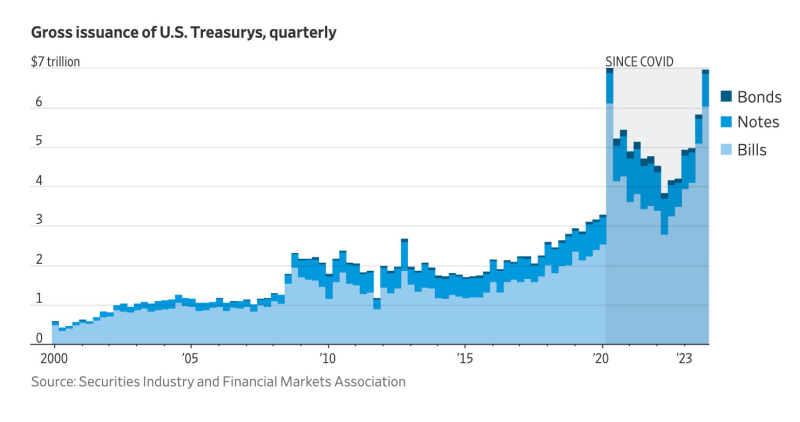
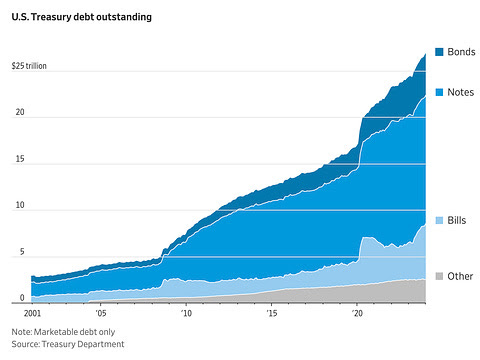
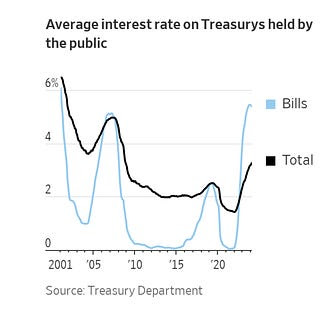

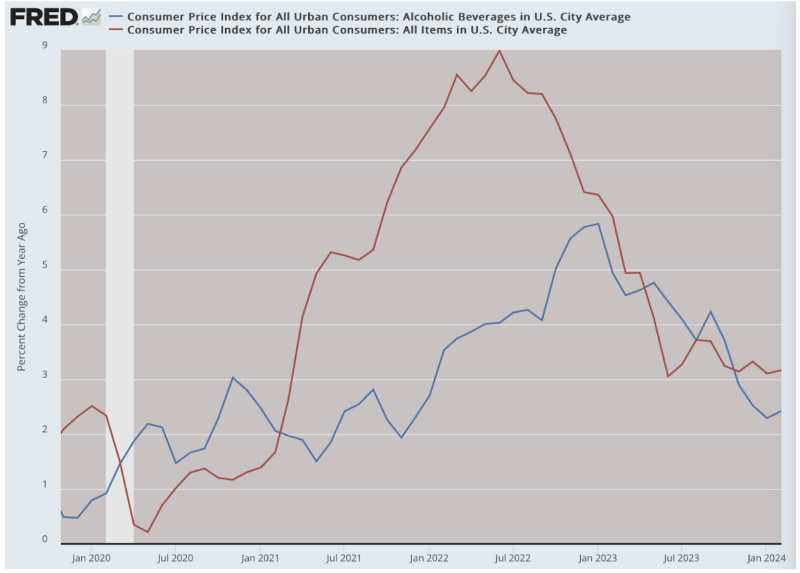



So, if Ukraine is voted into NATO while the war continues NATO is obligated to defend, meaning to attack Russia. This will mean WWIII.
Or, what Blinken is signaling, if there is an end to the war and Ukraine then is admitted into NATO, Russia will be compelled to attack Ukraine again and this will trigger WWIII. Only under this scenario Russia will be seen as the aggressor.
In either case, American policy seems to be to continue to expand the war, this time with all NATO members as active combatants.
Tony Blinken has completely lost his mind.'
....
https://scheerpost.com/2024/04/06/how-israel-weaponizes-water/
How Israel Weaponizes Water
Amid the intensifying water crisis that plagues billions of people across the world, Israel is using water as a weapon in its war against Palestinians by denying access and destroying infrastructure.
By November 2023, it was already clear that the Israeli government had begun to deny Palestinians in Gaza access to water.
“Every hour that passes with Israel preventing the provision of safe drinking water in the Gaza strip, in brazen breach of international law, puts Gazans at risk of dying of thirst and diseases related to the lack of safe drinking water’, said Pedro Arrojo-Agudo, U.N. special rapporteur on the human rights to safe drinking water and sanitation.
“Israel,” he noted, “must stop using water as a weapon of war.”
Before Israel’s most recent attack on Gaza, 97 percent of the water in Gaza’s only coastal aquifer was already unsafe for human consumption based on World Health Organisation standards. Over the course of its many attacks, Israel has all but destroyed Gaza’s water purification system and prevented the entry of materials and chemicals needed for repair.
In early October 2023, Israeli officials indicated that they would use their control over Gaza’s water systems as a means to perpetrate a genocide. As Israeli Major General Ghassan Alian, the head of the Coordination of Government Activities in the Territories (COGAT), said on 10 October, “Human beasts are dealt with accordingly. Israel has imposed a total blockade on Gaza. No electricity, no water, just damage. You wanted hell, you will get hell.”
On March 19, U.N. Humanitarian Coordinator for Palestine Jamie McGoldrick noted that Gaza needed “spare parts for water and sanitation systems” as well as “chemicals to treat water,” since the “lack of these critical items is one of the key drivers of the malnutrition crisis.”
“Malnutrition crisis” is one way to talk about a famine.
The assault on Gaza – whose entire population is “currently facing high levels of acute food insecurity,” according to Oxfam and the Integrated Food Security Phase Classification – has sharpened the contradictions that strike the world’s people with force.
A U.N. report released on World Water Day (March 22) shows that, as of 2022, 2.2 billion people have no access to safely managed drinking water, that 4 in 5 people in rural areas lack basic drinking water, and that 3.5 billion people do not have sanitation systems.
As a consequence, every day, over a thousand children under the age of 5 die from diseases linked to inadequate water, sanitation, and hygiene. These children are among the 1.4 million people who die every year due to these deficiencies.
The U.N. report notes that, since women and girls are the primary collectors of water, they spend more of their time finding water when water systems deteriorate due to inadequate or non-existent infrastructure or droughts exacerbated by climate change. This has resulted in higher dropout rates for girls in school.
A 2023 study by U.N. Women describes the perils of the water crisis for women and girls:
The lack of access to public toilets is by itself a serious danger to women in cities across the world, such as Dhaka, Bangladesh, where there is one public toilet for every 200,000 people.
Access to drinking water is being further constricted by the climate catastrophe. For instance, a warming ocean means glacier melt, which lifts the sea levels and allows salt water to contaminate underground aquifers more easily. Meanwhile, with less snowfall, there is less water in reservoirs, which means less water to drink and use for agriculture.
Already, as the U.N. Water report shows, we are seeing increased droughts that now impact at least 1.4 billion people directly.
According to the United Nations, half of the world’s population experiences severe water scarcity for at least part of the year, while one quarter faces “extremely high” levels of water stress. “Climate change is projected to increase the frequency and severity of these phenomena, with acute risks for social stability,” the U.N. notes. The issue of social stability is key, since droughts have been forcing tens of millions of people into flight and starvation.
Climate change is certainly a major driver of the water crisis, but so is the rules-based international order.
Capitalist governments must not be allowed to point to an ahistorical notion of climate change as an excuse to shirk their responsibility in creating the water crisis.
For instance, over the past several decades, governments across the world have neglected to upgrade wastewater treatment facilities. Consequently, 42 percent of household wastewater is not treated properly, which damages ecosystems and aquifers. Even more damning is the fact that only 11 percent of domestic and industrial wastewater is being reused.
Increased investment in wastewater treatment would reduce the amount of pollution that enters water sources and allow for better harnessing of the freshwater available to us on the planet.
There are several sensible policies that could be adopted to immediately address the water crisis, such as those proposed by U.N. Water to protect coastal mangroves and wetlands; harvest rainwater; reuse wastewater; and protect groundwater. But these are precisely the kinds of policies that are opposed by capitalist firms, whose profit line is improved by the destruction of nature.
In March 2018, we launched our second dossier, “Cities Without Water.” It is worthwhile to reflect on what we showed then, six years ago:
In other words, watering golf courses is more important than providing piped water to the thousand of children under the age of five who die every day due to water deprivation. Those are the values of the capitalist system.